Sir Turquine
Le Morte d'ArthurSir Turquine is a powerful knight whose private vengeance against Sir Launcelot turns a forest manor into a prison for Arthur’s knights. His capture of Sir Ector and other members of the Round Table establishes the danger he poses; his eventual encounter with Launcelot reveals that his violence has been driven by the death of his brother, Sir Carados. Their prolonged duel ends with Turquine’s death and the release of the prisoners, making his defeat both the conclusion of a personal feud and a rescue of Arthur’s fellowship.
Identity and Background
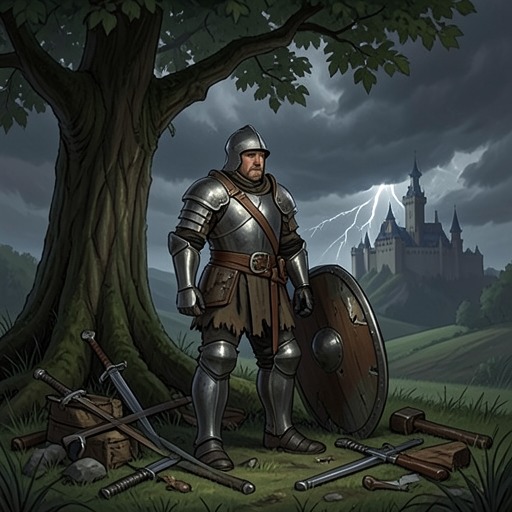
Sir Turquine lives at a fortified manor beside a ford in a forest. A tree near the ford bears the shields of knights he has overcome, and a copper-and-brass basin hangs there as a signal: a passing knight who strikes it is met by Turquine. The display makes the challenge visible before the combat begins, while the prisoners and accumulated shields show how many have already failed it.
His strength is described by those who encounter him as exceptional. Sir Ector manages to land a forceful blow that turns Turquine’s horse around, but Turquine then lifts Ector from the saddle and carries him to his hall. He offers to spare Ector’s life only if Ector will swear to remain his prisoner for life. Ector refuses to surrender that freedom, and Turquine has him disarmed, beaten with thorns, and confined in a deep dungeon among other captured companions of the Round Table.
Captives and the Forest Challenge
Sir Ector comes to the manor while searching for Sir Launcelot, who has left court to seek adventures. At the ford he recognizes Sir Lionel’s shield among those hanging from the tree and resolves to avenge his brother. After striking the basin, he is challenged and taken prisoner. In the dungeon, Ector finds Sir Lionel and learns that Lionel last saw Launcelot asleep beneath an apple tree; the captive knights fear that no one else can match Turquine and free them.
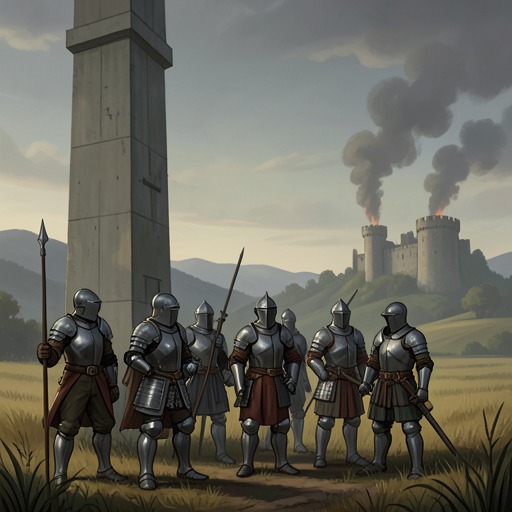
Later, a damsel tells Launcelot that Turquine is the strongest knight she knows and that he holds sixty-four knights of Arthur’s court. She asks Launcelot to aid her and other women whom a further false knight is distressing. Launcelot agrees to follow her and take on the challenge. At the manor he recognizes Sir Gaheris, who is being brought along bound, and declares his intention to rescue him and, if Turquine is overcome, free the other prisoners as well.
The Feud with Launcelot
Before Launcelot discloses his identity, Turquine pauses during their contest and proposes an unexpected settlement. He praises his opponent’s size and endurance, offers to release all sixty-four prisoners, and suggests that they become companions—on condition that the knight is not Launcelot. The offer exposes the grievance beneath Turquine’s hostility: Launcelot killed Turquine’s brother, Sir Carados, at the Dolorous Tower.
Turquine says he has killed a hundred good knights and maimed as many more because of Launcelot, while sixty-four remain in his prison. He is prepared to spare the unknown opponent and end the conflict through friendship, but makes an exception of Launcelot, whom he believes must die if they meet. Launcelot answers by identifying himself as Sir Launcelot du Lake, son of King Ban of Benwick and a knight of the Round Table. The conditional offer collapses at once: Turquine welcomes the revelation because it brings him face to face with the man he has sought.
Defeat and Aftermath
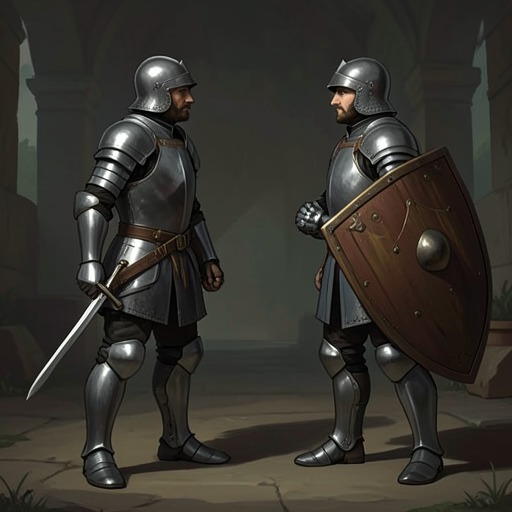
The combat begins with a mounted charge. The knights strike each other’s shields so forcefully that both horses fall, and they continue on foot with swords. Their contest lasts for hours, with neither able to gain a decisive advantage; eventually both are exhausted and pause. Once the fight resumes, Turquine grows faint and lowers his shield. Launcelot seizes that opening, brings him down, and kills him.
Launcelot then asks Sir Gaheris for the loan of his horse so that he can carry out the release of the captives. Gaheris readily gives it, saying Launcelot has saved both him and his horse. When Launcelot reaches Arthur’s court before the feast of Pentecost, the knights held by Turquine return and honour him; Gaheris recounts the combat and says that Turquine was the strongest knight he had seen apart from Launcelot. The liberation makes Turquine’s defeat consequential beyond their individual feud: the violence that had isolated and imprisoned members of the Round Table is reversed by their return to the fellowship.
Narrative Role
Turquine is defined by the combination of prowess and vengeance. His challenge at the ford gives his violence a repeated, almost procedural form: a signal is struck, a knight is tested, and those who lose are carried into captivity. Yet the encounter with Launcelot complicates a simple contest of strength. Turquine can imagine mercy and companionship for an opponent whose identity he does not know, but his hatred of Launcelot overrides that possibility as soon as the name is revealed.
The story also connects Turquine’s personal grievance to a wider cost. His revenge for Sir Carados has brought death, lasting disablement, imprisonment, and the capture of Launcelot’s companions. His own death ends the immediate threat and enables their release, while the later testimony of Gaheris and the returned knights turns the private duel into a publicly recognized feat at court.